 Whatcom County
 Why Edgemoor's Setting Is Hard on Siding
Edgemoor sits close enough to Bellingham Bay that homes here take on a different kind of weathering than siding a few miles inland. Salt-laden air drifts in off the water and settles on every exterior surface, which speeds up corrosion on fasteners, flashing, and trim long before most homeowners notice a problem with the siding panels themselves. Add in driving rain that comes sideways off the water during winter storms, and you get wind-driven moisture pushed up under laps and around trim in ways that calmer, more sheltered lots rarely deal with.
The other factor that's specific to Edgemoor and much of Whatcom County is tree cover. Many lots here carry mature evergreens and dense landscaping that keep siding shaded and damp well after a storm has passed elsewhere. That extended dry-time, combined with our long moss season, is exactly the environment moss and algae need to take hold on a wall surface. None of this means siding is doomed in Edgemoor — it means the details of the installation have to account for salt air, wind-driven rain, and shade from day one, not as an afterthought.
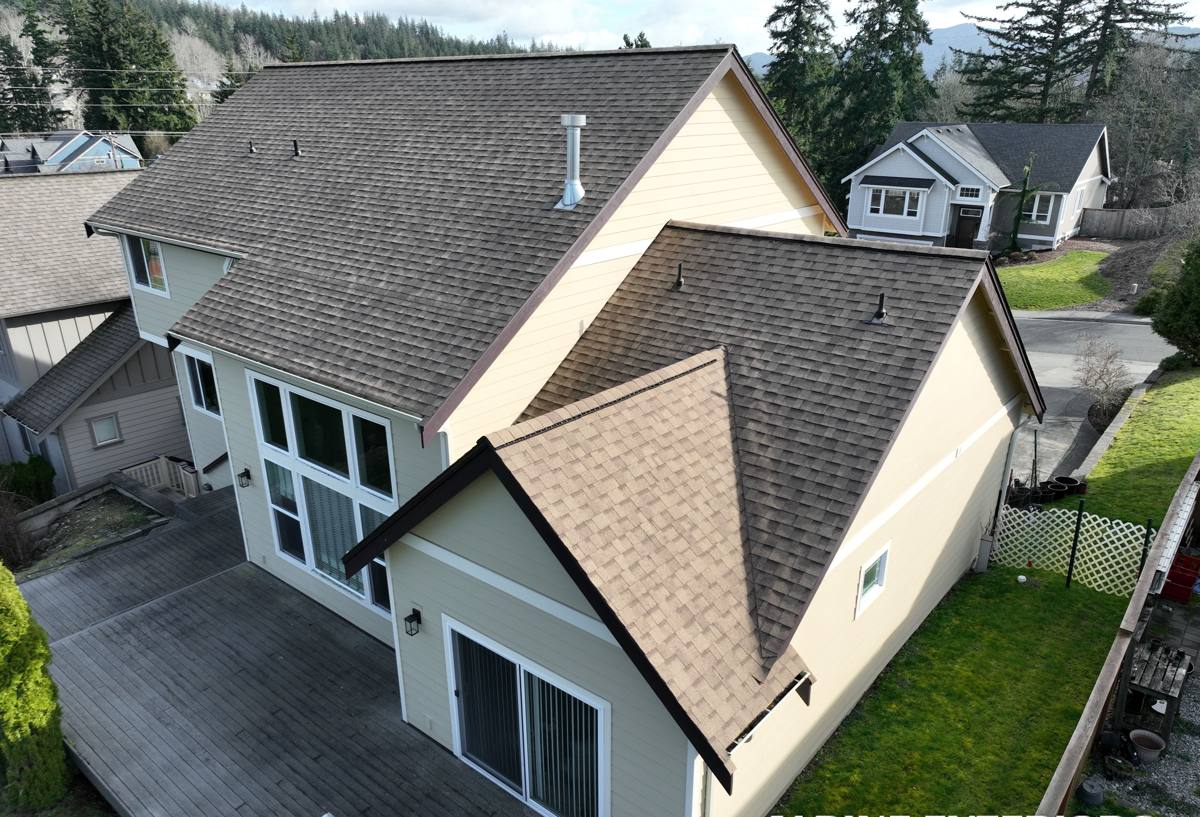
Signs Your Edgemoor Home Needs Replacement, Not Just Repair
Not every siding problem calls for a full tear-off. But in a marine climate, small issues tend to compound quickly once moisture gets behind the cladding. Here's what typically separates a repair job from a replacement job:
- Soft, spongy, or crumbling siding when pressed, especially near the bottom courses or below windows
- Persistent moss or dark streaking that comes back within weeks of cleaning
- Paint that's peeling, bubbling, or chalking across large sections rather than one isolated spot
- Visible gaps, warping, or buckled panels, particularly on the sides of the house that face the water or prevailing wind
- Interior signs like musty smells, soft drywall, or peeling interior paint near exterior walls
- Fasteners that have rusted, bled through the finish, or backed out of the siding
- Siding that's original to a home built decades ago and has never been fully replaced or re-wrapped
If you're only seeing one or two of these on a limited area, a targeted repair may be enough. When several of these show up together, or when we open up a section and find the sheathing or house wrap has already failed, replacement is the more honest recommendation — patching over compromised sheathing just hides the problem for another season.
What a Correct Siding Replacement Actually Involves
Tear-Off and What's Underneath Matters More Than the New Siding
The siding you can see is the least important part of whether a job holds up in Edgemoor's climate. Once the old siding comes off, we inspect the sheathing for rot or soft spots, check the condition of the existing water-resistive barrier, and confirm that window and door flashing was done correctly the first time. Any compromised sheathing gets replaced before a single new panel goes up — installing new siding over damaged sheathing just delays the same failure by a few years.
Fastening and Trim Details for Salt Air
Salt air is hard on metal. Fasteners, flashing, and trim accessories that aren't rated for coastal exposure will corrode faster here than they would a few miles inland, even under siding that's otherwise performing fine. We use fastener and flashing materials suited to a marine environment and follow manufacturer fastening patterns exactly — over-driven or under-driven nails are one of the most common causes of early siding failure, and they're invisible from the ground until moisture gets in behind them.
Flashing and Drainage for Driving Rain
Wind-driven rain finds every shortcut in a siding installation — gaps at trim boards, missing kick-out flashing where a roofline meets a wall, caulk used in place of proper flashing. Correct installation means head flashing above every window and door, kick-out flashing at roof-to-wall intersections, proper drainage planes behind the siding, and clearance at the bottom of the wall so water sheds away from the structure instead of wicking into it.
Why We Install Only James Hardie Fiber Cement
We don't install vinyl, LP SmartSide, primed wood, or cedar, and it's worth being straightforward about why. Each of those products has legitimate strengths — vinyl is inexpensive, engineered wood products are lighter and faster to install, and cedar has a natural look plenty of homeowners want. But in a climate defined by salt air, sustained moisture, and a long moss season, the trade-offs on those products show up faster than they do in drier regions. Vinyl can warp and fade, and its seams give moisture an entry point. Engineered wood siding relies on maintaining an intact factory coating, and any breach lets moisture into the wood fiber core. Cedar and primed wood need ongoing refinishing to keep moisture out, which is a real ongoing cost in a place with our rainfall.
James Hardie fiber cement is non-combustible, doesn't support moss growth the way wood-based products can, and comes with a factory-applied ColorPlus finish that's engineered to hold color and resist the fading that field-applied paint suffers under UV and salt exposure. Hardie also makes climate-engineered HZ product lines specifically built for regions like ours. That's the standard we've chosen to build on.
| Factor | Vinyl | Engineered Wood (LP SmartSide) | Cedar / Primed Wood | James Hardie Fiber Cement |
|---|---|---|---|---|
| Moisture tolerance | Poor at seams | Depends on coating integrity | Requires ongoing sealing | Engineered for wet climates |
| Moss/algae resistance | Moderate | Moderate | Low — organic material | High |
| Finish durability | Fades over time | Factory coating, needs upkeep | Needs repainting/staining | Factory ColorPlus finish |
| Fire resistance | Melts/deforms | Combustible | Combustible | Non-combustible |
| Typical warranty | Varies widely | Manufacturer-specific | None on the material itself | Long-term, transferable |
Our Siding Replacement Process for Edgemoor Homes
- On-site assessment — we walk the exterior, check for soft sheathing and existing moisture damage, and identify which walls take the most exposure from wind and rain off the bay
- Scope and proposal — a written plan covering tear-off, sheathing repair allowances, flashing details, and the specific Hardie product and color
- Tear-off and sheathing inspection — old siding removed, sheathing checked and repaired as needed before anything new goes on
- Water-resistive barrier and flashing — new house wrap, window and door flashing, and kick-out flashing installed to manufacturer and code specifications
- Hardie installation — panels or lap siding installed to exact fastening and clearance specs for our climate zone
- Trim, caulking, and detail work — corners, trim boards, and joints finished to shed water rather than trap it
- Final walkthrough — we review the completed work with you before calling the job done
What Affects the Cost of a Siding Replacement in Edgemoor
Every home is different, so we won't quote a number without seeing the house, but these are the factors that consistently move the price up or down:
| Factor | Why It Matters |
|---|---|
| Home size and number of stories | More square footage and taller walls mean more material, labor, and staging |
| Condition of existing sheathing | Hidden rot found during tear-off adds repair scope that can't be priced until the old siding is off |
| Trim and architectural detail | Homes with more corners, dormers, or decorative trim take longer to flash and finish correctly |
| Access and site conditions | Tight lots, slopes, mature landscaping, or water-side access can affect staging and equipment |
| Product selection | Hardie panel style, plank width, and ColorPlus color affect material cost |
| Tear-off vs. overlay | A full tear-off costs more up front than covering old siding, but it's the only way to actually inspect and fix what's underneath |
Why Hiring a Crew That Already Works in Edgemoor Matters
A siding crew that regularly works near Bellingham Bay already knows which walls on a given lot tend to catch the worst of the wind-driven rain, and builds the flashing and drainage details around that reality instead of treating every wall the same. That local pattern recognition matters more than it sounds like it should — it's the difference between a job that looks fine at handoff and one that's still performing correctly five winters later.
There's also the practical side: permitting and inspection requirements through the local jurisdiction, familiarity with the mix of home ages and styles common to Whatcom County neighborhoods like Edgemoor, and simply being close enough to show up quickly if a question comes up mid-project or after the fact. A crew based in the region has a reputation riding on every job they do here, which tends to show in the quality of the details you can't see once the siding is closed up.
Maintaining Your New Siding in a Marine Climate
Correct installation does most of the work, but a little upkeep keeps Hardie siding looking right for the long haul in a climate like ours:
- Rinse siding gently once or twice a year to keep moss and algae from establishing, especially on shaded, tree-covered walls
- Keep gutters clear so water isn't overflowing directly onto siding below
- Trim back vegetation and tree limbs that keep siding shaded and damp for extended periods
- Check caulking at trim joints and penetrations annually and re-caulk any that's cracked or separated
- Have any impact damage or loose trim addressed promptly rather than waiting for the next scheduled maintenance
If you're seeing early signs of wear on your current siding, or you're simply ready to stop maintaining a product that keeps asking for attention, we're happy to take a look and walk you through what a proper replacement would involve for your specific home. Reach out for a free, no-pressure estimate using the form below.