 Whatcom County
 Siding Installation in Edgemoor: What the Location Actually Demands
Edgemoor sits close to Bellingham Bay, and that proximity to open water shapes what siding has to survive here. Homes in this part of Whatcom County deal with a combination most inland neighborhoods don't: salt-laden air off the bay, driving wind-blown rain that hits walls at an angle instead of falling straight down, and a moss season that can run eight or nine months out of the year in shaded, tree-covered lots. Any one of those factors is manageable. Together, they're what separates a siding job that looks good for two years from one that holds up for decades.
We install siding across Whatcom County, but Edgemoor jobs get evaluated a little differently before we ever price them. Wall orientation relative to the bay, tree canopy coverage, and how much wind-driven moisture a given elevation actually takes in a typical winter all factor into the install plan — not just the material choice.
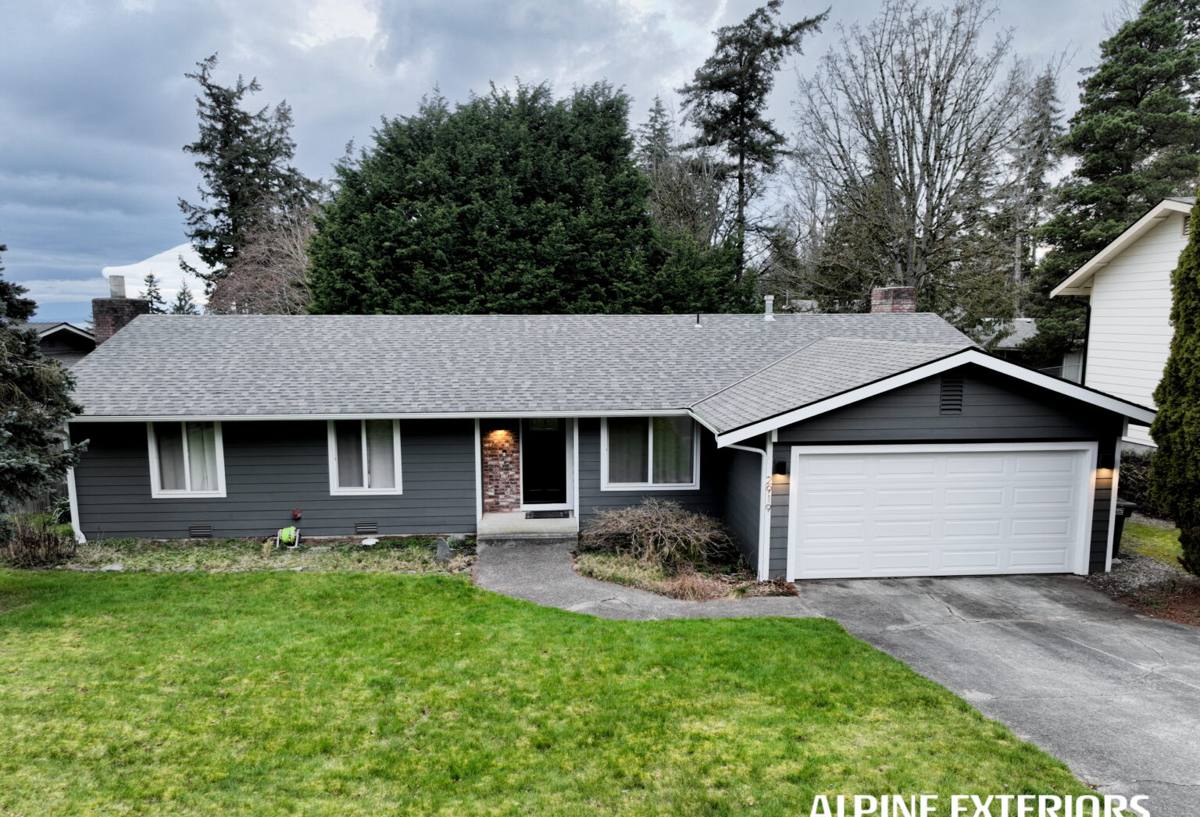
Why Salt Air and Moss Change the Calculus
Salt Air and Metal Components
Salt air accelerates corrosion on anything metal — fasteners, flashing, trim caps, even the cut edges of some siding products where factory coatings don't fully seal. Over years, corroding fasteners can loosen siding panels or stain the face of the material as rust bleeds through. This is a bigger deal on homes closer to the water, and Edgemoor qualifies. It's part of why fastener selection and flashing details matter more here than they would on a home fifteen miles inland.
Driving Rain and Wall Assemblies
Whatcom County gets a lot of rain, but the rain that does the most damage in bay-adjacent neighborhoods is wind-driven — it hits siding at an angle and works its way behind laps, around trim, and into seams that a straight-down rain would never reach. A siding installation built for this has to assume water will contact the wall assembly, not just hope it won't. That means correct lap exposure, properly lapped and taped house wrap, and flashing at every horizontal transition — window heads, decks, roof-to-wall intersections.
Moss and Shaded Exposures
Moss and algae growth thrive in the cool, damp, shaded conditions common on tree-covered Edgemoor lots, especially on north-facing walls that see limited direct sun. Moss itself doesn't destroy siding the way rot does, but it holds moisture against the surface longer, and on materials without a factory-baked finish, it stains permanently into the surface over a few seasons. Cleaning it off repeatedly is also a maintenance burden most homeowners underestimate when they choose a product.
What a Correct Siding Installation Involves
A siding job is only as good as what's underneath it. The visible panels get all the attention, but the water management system behind them is what actually determines whether a home stays dry for the next 30-plus years. On every installation, that means:
- A continuous, correctly lapped weather-resistive barrier (house wrap) with all seams taped
- Proper flashing at every window, door, and roof-to-wall transition — installed so water sheds outward, not into the wall cavity
- Correct fastener type, spacing, and depth for the specific siding product, not a generic "close enough" pattern
- Appropriate clearance between the bottom of the siding and grade, decks, and roof lines to avoid wicking moisture
- Rain-screen or drainage gap detailing where the wall assembly and climate call for it
- Caulking and sealant only where the manufacturer specifies it — over-caulking traps moisture just as often as it keeps it out
Skip any one of these and the siding itself becomes almost irrelevant — water gets behind it regardless of what's on the face of the wall.
Our Process for an Edgemoor Job
1. On-Site Assessment
We walk the exterior, check the current siding and trim condition, look at wall orientation relative to prevailing wind and rain direction, and note tree cover that affects drying time and moss exposure. Bay-facing and shaded elevations often get called out separately in the plan.
2. Tear-Off and Substrate Check
Old siding comes off and we inspect the sheathing underneath for water damage or rot before anything new goes up. This is the point where hidden problems — often the result of years of undetected moisture intrusion — get caught and addressed, not covered over.
3. Water Management Layer
House wrap, flashing, and drainage detailing go in before a single piece of siding is installed. This step doesn't show up in the finished look of the house, but it's the part that determines whether the job lasts.
4. Siding Installation
Panels, fasteners, and trim go in to manufacturer spec — correct exposure, correct fastener pattern, correct clearances at grade and roof lines.
5. Final Walkthrough
We review the finished exterior with the homeowner, confirm caulking and trim details, and answer questions about care going forward.
Why We Install Only James Hardie Fiber Cement
We standardized on James Hardie fiber cement siding for every home we work on, including in Edgemoor, and it's not a marketing preference — it's a response to what this climate does to other materials over time.
| Concern in a Bay-Adjacent Climate | How James Hardie Addresses It |
|---|---|
| Moisture absorption at cut edges and laps | Fiber cement composition resists swelling and moisture wicking far better than wood-based or wood-fiber siding products |
| Fading and staining from salt air and moss | ColorPlus factory-baked finish resists fading and holds up to repeated washing without stripping the color coat |
| Fire exposure risk | Non-combustible fiber cement composition, unlike wood-based or vinyl products |
| Long-term warranty confidence | Strong transferable warranty backed by a manufacturer with decades in siding-specific engineering |
| Regional climate matching | HZ5 product line engineered for Pacific Northwest freeze-thaw and moisture cycling |
We don't install LP SmartSide, vinyl, Cemplank, Allura, primed spruce, or cedar. Each of those has a place in the market and reasonable people choose them, but we've made a professional decision not to put our name behind installs we don't think hold up the way this climate demands. Vinyl can warp and fade under sustained UV and temperature swings; wood-based products need more diligent maintenance to resist moisture and pest intrusion; other fiber cement brands may perform adequately but haven't matched what we've seen from Hardie's finish durability and warranty structure over time. James Hardie's ColorPlus finish in particular matters in a moss-prone, salt-air environment — a factory-cured finish resists the staining and fading that repeated moss cleaning and salt exposure cause on field-painted or lower-grade coatings.
HZ5 and Why the "Climate Zone" Detail Matters
James Hardie makes region-specific product formulations under its HZ (HardieZone) system. HZ5 is engineered for areas with more moisture cycling and freeze-thaw variation — which describes Whatcom County's climate more accurately than a one-size-fits-all siding formulation would. Using the correct HZ line isn't a marketing detail; it affects how the product's moisture and expansion properties actually perform on the wall.
Cost Factors for an Edgemoor Siding Project
Every home is different, so we don't quote sight-unseen prices, but the factors that move a bid up or down are consistent:
| Factor | Why It Matters |
|---|---|
| Home size and wall complexity | More corners, dormers, and roof-to-wall transitions mean more flashing and cut work |
| Current siding condition | Rot or water damage found at tear-off adds sheathing repair before new siding goes on |
| Bay-facing vs. sheltered elevations | Bay-facing walls may need additional flashing and drainage detailing given wind-driven rain exposure |
| Siding profile and trim selection | Lap width, trim style, and accent details affect material and labor cost |
| Access and site conditions | Tree cover, tight lot lines, and slope affect scaffolding and staging time |
Maintenance Once It's Installed
James Hardie siding is low-maintenance, not no-maintenance, and the Edgemoor environment calls for a modest annual routine:
- Rinse the exterior once or twice a year to clear salt residue and early moss growth before it takes hold
- Keep gutters clear so overflow doesn't run down the siding face repeatedly
- Trim back vegetation that keeps a wall shaded and damp longer than it needs to be
- Inspect caulking at trim joints every couple of years and touch up as needed
- Have flashing and trim checked periodically, especially on bay-facing elevations
That's meaningfully less than what wood-based siding demands in the same conditions, and it avoids the fading and warping issues that show up on lower-grade materials exposed to this much salt and moisture.
Why Local Installation Experience Matters Here
A crew that already works Edgemoor and the greater Bellingham Bay area knows which elevations take the worst of the wind-driven rain, how much moss pressure to expect on shaded lots, and where salt air tends to attack fasteners and trim first. That's not something you get from a general contractor pricing the job off a satellite photo. It shows up in small decisions — where extra flashing goes, which fastener spec gets used, how the water management layer gets detailed on the bay-facing wall — and those small decisions are exactly what determine whether a siding job is still performing well in year 20.
If you're planning a siding project in Edgemoor, we're happy to walk the exterior, look at your home's specific exposure, and put together a straightforward estimate — no pressure, no sales script. Reach out through the form below to get started.