 Whatcom County
 Why Edgemoor Decks Face Tougher Conditions Than Most Neighborhoods
Edgemoor sits close enough to Bellingham Bay that salt-laden air is a constant factor in how outdoor structures age. Combine that with Whatcom County's long, wet fall-through-spring stretch and a moss season that can run half the year, and you get a set of conditions that punish decks built to a generic, one-size-fits-all spec. A deck that would hold up fine in a dry inland climate can start showing fastener corrosion, soft framing, and slick, moss-covered boards within just a few seasons out here.
None of this means a deck can't last decades in Edgemoor. It means the design, material choices, and installation details have to account for salt exposure, near-constant moisture, and shaded, north-facing yards where things simply don't dry out the way they would in full sun. That's the difference between a deck that needs real repair work by year eight and one that's still solid at year twenty-five.
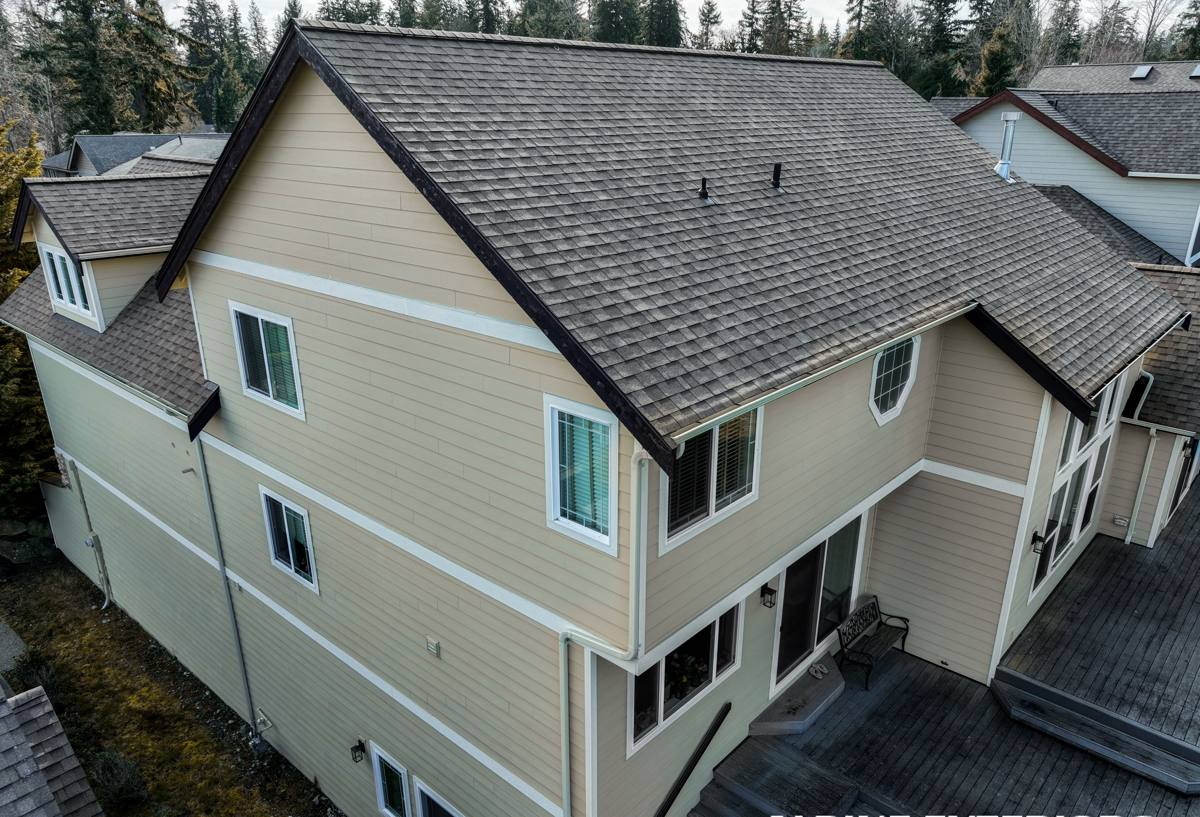
What a Deck Built for This Climate Actually Needs
A correctly built deck for this part of Whatcom County isn't about upgrading everything to the most expensive option — it's about getting a handful of details right that generic builders often skip or shortcut.
Corrosion-Resistant Fasteners and Hardware
Standard galvanized fasteners can start to corrode faster near the bay than most homeowners expect, especially where they're in direct contact with treated lumber. We use stainless steel or heavy-duty coated fasteners and structural hardware rated for coastal exposure, particularly on joist hangers, ledger bolts, and post bases where a failure isn't cosmetic — it's structural.
Real Drainage, Not Just a Flat Surface
A deck surface has to shed water fast, and the substructure below it needs a path for moisture to escape rather than pool. That means correct board spacing, a slight slope built into the framing, and airflow underneath rather than a sealed-off crawlspace that stays damp all winter.
Materials That Don't Trap Moisture Against Wood
Composite and capped-composite decking look great, but the framing and flashing details underneath still have to keep water off the wood structure. A deck that traps moisture under the decking — regardless of what the surface material is — will rot from below no matter how nice the top looks.
Choosing the Right Decking Material for Edgemoor
There's no single "best" material for every project — the right call depends on budget, how much maintenance the homeowner actually wants to do, and how exposed the deck is to salt air and shade.
| Material | How It Handles Salt Air & Moisture | Maintenance Load | Typical Lifespan Here |
|---|---|---|---|
| Pressure-treated wood | Needs sealing/staining regularly to resist moisture and salt exposure | High — annual cleaning and refinishing | 10-15 years with upkeep |
| Cedar | Naturally moisture- and rot-resistant, but still needs periodic finish maintenance in salt air | Moderate to high | 15-20 years with upkeep |
| Capped composite | Excellent — resists moisture absorption, fading, and salt-driven surface breakdown | Low — occasional washing | 25-30+ years |
| PVC decking | Very good — fully synthetic, no wood fibers to absorb moisture | Low | 25-30+ years |
For Edgemoor specifically, we lean toward capped composite or PVC on projects with heavy shade or close bay exposure, simply because the maintenance burden of real wood in those conditions is significant. Where a homeowner wants the look and feel of real wood and is willing to stay on top of refinishing, cedar is still a solid, honest choice — it just needs a real maintenance commitment.
Framing and Structure: Where Decks Actually Fail Here
Most deck failures we see in this area aren't about the decking boards at all — they're about what's underneath. This is where cutting corners shows up years later as a safety issue, not just a cosmetic one.
Ledger Board Flashing
The ledger board — where the deck attaches to the house — is the single most common source of hidden rot on any deck, anywhere. In a climate with this much rainfall, correct flashing that directs water away from the house-to-deck connection isn't optional; it's the detail that determines whether that joint is dry or slowly rotting behind the siding.
Post Bases and Footings
Posts sitting directly in concrete or in standing water at grade will fail structurally over time. Post bases that keep wood elevated off wet concrete, combined with footings set below frost depth and designed for our soil conditions, keep the structural posts dry and sound.
Joist Protection
Even pressure-treated joists benefit from a joist tape or protective barrier along the top edge, where water sits longest under the decking boards. It's a small added step that meaningfully extends the life of the framing underneath.
Moss, Algae, and Drainage: The Long Wet Season Problem
Whatcom County's moss season isn't a minor nuisance here — on a shaded deck near the water, moss and algae growth can turn a surface genuinely slick within a single wet season. This is as much a safety issue as an appearance one.
Getting ahead of it comes down to a few design choices made at build time, not after the fact:
- Correct board spacing so water and debris don't sit trapped between boards
- Proper slope in the framing so water actively runs off rather than pooling
- Open airflow underneath the deck rather than a sealed skirt that traps humidity
- Decking material choice that resists moss adhesion better than raw, untreated wood
- Placement and orientation, where possible, that reduces prolonged full shade
None of these eliminate the need for occasional cleaning, but they dramatically reduce how often and how aggressively a homeowner has to deal with it.
Our Process for Edgemoor Deck Projects
Every deck project we take on in this neighborhood follows the same core process, adjusted for the specific lot and house:
- On-site assessment — we look at sun exposure, drainage patterns on the lot, proximity to the water, and how the deck ties into the existing structure.
- Design and material selection — sized and specced around the home's layout, the homeowner's maintenance preference, and budget.
- Permitting — Whatcom County and City of Bellingham permitting requirements are confirmed and handled before any framing starts.
- Structural build — framing, flashing, post bases, and joist protection installed to hold up specifically to salt air and heavy rainfall.
- Decking, railing, and finish work — surface material installed with correct spacing and fastening for drainage and long-term stability.
- Final walkthrough — we go over care and maintenance specific to the material chosen so there are no surprises down the road.
Cost Factors Homeowners Should Understand
Deck pricing varies a lot project to project, but the biggest cost drivers are consistent across most Edgemoor jobs:
| Factor | Why It Moves the Price |
|---|---|
| Decking material | Composite and PVC cost more upfront than wood but reduce long-term maintenance spend |
| Deck height and grade | Sloped lots and elevated decks need more substructure, footings, and often railing/stairs |
| Size and layout complexity | Multi-level decks, angled sections, or built-in features add labor and material |
| Railing type | Cable, glass, and custom rail systems cost more than standard baluster railing |
| Site access and demolition | Removing an old deck or working a tight, tree-lined lot adds time to the project |
We'll always walk through these factors specific to your property before giving a number — broad ranges without seeing the site aren't useful to anyone.
Maintenance Checklist for Coastal Whatcom County Decks
Whatever material a deck is built with, a short annual routine goes a long way toward getting the full lifespan out of it in this climate:
- Sweep debris out from between boards before it holds moisture against the surface
- Rinse off salt residue and organic buildup a few times a year, more often near the water
- Check for early moss or algae growth in shaded corners and treat it before it spreads
- Inspect ledger board flashing and railing connections annually for early signs of movement
- Re-stain or reseal wood decking on the schedule the manufacturer or installer recommends
- Keep gutters and downspouts near the deck clear so runoff isn't draining directly onto it
Why Hiring a Crew That Already Works in Edgemoor Matters
A deck built to a generic national spec sheet isn't built for this neighborhood's actual conditions. A crew that already works regularly in Edgemoor and the surrounding Whatcom County area knows which lots sit close enough to the bay to need upgraded hardware, which yards stay shaded and damp long after the rain stops, and what the local permitting process actually requires before framing starts. That local familiarity shows up later as fewer surprises — not more callbacks for rot, corrosion, or a slick, moss-covered surface a year or two after the last crew left.
If you're planning a new deck or replacing one that's past its prime, we're happy to come take a look at your property and talk through what actually makes sense for your lot, your budget, and how you want to use the space. Reach out for a free, no-pressure estimate using the form below.