 Whatcom County
 Cordata's Climate Is Harder on Siding Than It Looks
Cordata sits on the north side of Bellingham, in a part of Whatcom County that gets the full package of Pacific Northwest weather: near-constant damp air off the Sound, driving horizontal rain that gets pushed sideways by wind off the water, and long stretches of the year where roofs, fences, and siding stay shaded and wet long enough to grow moss and algae. None of that is dramatic weather compared to a hurricane zone, but it's relentless, and relentless is what actually wears siding out. A material that can shrug off one bad storm but slowly absorbs moisture year after year will still fail here — just slower and quieter, usually behind the wall where you can't see it until there's a problem.
Add in the salt-laden air that drifts inland from Bellingham Bay and the wider Puget Sound, and you've got a combination that's tough on fasteners, caulking, paint, and any siding material with a wood or foam core. This is exactly the kind of environment where the siding choice and the installation detailing matter more than they would in a drier inland climate.
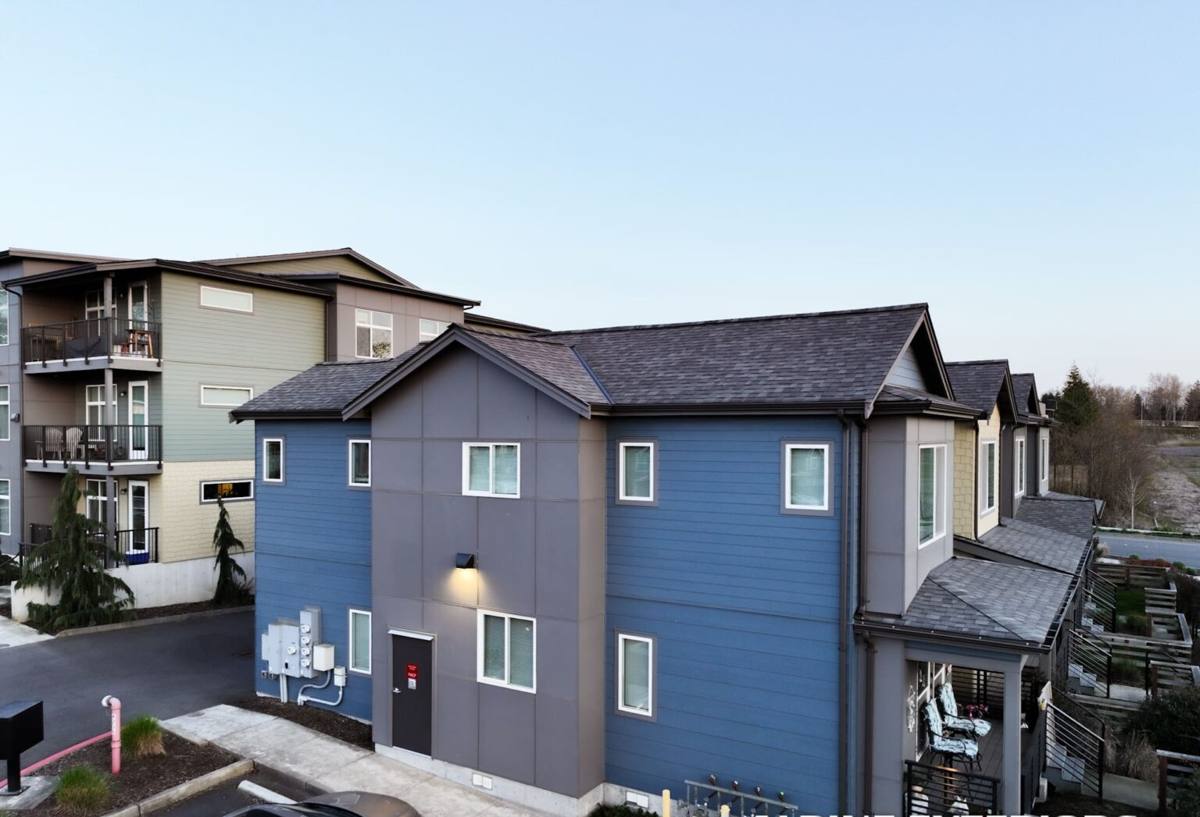
What Cordata Homes Actually Need From Their Siding
Based on what we see on siding tear-offs across Whatcom County, a siding system here needs to do four things well:
- Resist moisture absorption at the core, not just at the painted surface
- Hold a factory finish that won't crack or peel under repeated wet-dry cycling
- Resist moss and algae growth on shaded north- and west-facing walls
- Stay dimensionally stable through freeze-thaw swings in winter and dry spells in summer
This is also why we don't split our attention across five different siding brands. We install James Hardie fiber cement exclusively, because it's engineered for exactly this list, and we'd rather be excellent at one system than average at several.
Why James Hardie Fits This Specific Climate
The Core Material
James Hardie siding is fiber cement — sand, cement, and cellulose fiber, not wood pulp or foam. It doesn't absorb water the way engineered wood siding can, and it's non-combustible, which matters given how dry Northwest summers have gotten in recent years even in a normally wet county like this one.
Climate-Engineered Formulation
Hardie makes region-specific formulations (their HZ5 line is built for climates with freeze-thaw cycling and heavy moisture exposure, which describes Whatcom County well). That's a different approach than a one-size-fits-all siding product, and it's part of why we standardized on this manufacturer rather than a generic fiber cement alternative.
ColorPlus Factory Finish
Most of the color failure we see on old siding — chalking, fading, peeling at seams — comes from field-applied paint that was never going to hold up to this much rain exposure. Hardie's ColorPlus finish is baked on at the factory under controlled conditions, with a thicker, more UV- and moisture-resistant coating than a painter can achieve on site. It also comes with its own finish warranty, separate from the product warranty.
What a Correct Installation Involves
Fiber cement siding is only as good as the installation behind it. A large share of the moisture problems we uncover on Whatcom County homes aren't a siding failure at all — they're a flashing, clearance, or fastening mistake from years earlier finally catching up with the wall. On a proper Hardie install we're paying attention to:
- A continuous weather-resistant barrier behind the siding, with all seams and penetrations properly lapped and sealed
- Correct flashing at every window, door, and roofline transition — the single most common failure point on older installs
- Proper clearance between the bottom of the siding and grade, decks, or roof surfaces so water can't wick up into the board
- Manufacturer-specified fastener type, spacing, and depth (over- or under-driven nails are a common cause of cracking)
- Correct joint treatment and caulking at butt joints, corners, and trim — done with products rated for the exposure
- A rainscreen gap where conditions call for it, giving any incidental moisture a way to drain and dry instead of sitting against the wall
Skip any one of these and you can still end up with a wall that looks right for a few years and fails quietly behind the surface — which is a hard thing to catch in a climate this wet until the damage is already done.
Common Problems We Find on Older Siding in This Area
| What We Find | Why It Happens Here |
|---|---|
| Moss and dark algae staining on north/shaded walls | Extended damp season plus limited direct sun exposure on certain exposures |
| Soft or delaminating trim and siding edges | Wood-based products absorbing moisture at cut ends and joints over repeated wet seasons |
| Peeling or chalking paint | Field-applied finishes breaking down faster under constant rain and UV cycling |
| Corrosion around fasteners and trim hardware | Salt-influenced air near the Sound accelerating metal fatigue |
| Hidden moisture damage at window and door flashing | Original installation shortcuts that only show themselves years later |
None of these are unusual or a sign of a badly-built home — they're just what this climate does to siding systems that weren't detailed for it.
Our Process on a Cordata Job
- Exterior assessment — we walk the whole home, check every elevation, and look at trim, flashing, and any existing moisture damage before quoting anything
- Tear-off and inspection — removing old siding lets us see the sheathing and weather barrier underneath, which is where real problems usually hide
- Repair the wall, not just the surface — any soft sheathing, damaged flashing, or gaps in the moisture barrier get fixed before a single new board goes up
- Install to Hardie's written specifications — correct fasteners, clearances, and joint treatment, not shortcuts that only show up as a callback in a few years
- Trim, caulk, and finish detailing — the parts most likely to be rushed on a lower-bid job are where we spend the most care
- Final walkthrough — we go over the finished work with the homeowner before calling it done
Why a Crew That Already Works Cordata Matters
Siding crews that mostly work drier inland regions sometimes apply detailing that's technically code-compliant but not really built for a climate like this one — thinner clearances, fewer flashing steps, less attention to drainage behind the wall. A crew that works Whatcom County regularly has already seen what this rain and salt air do to a sloppy install, and details accordingly. There's also a practical scheduling side to it: knowing the rainy season here well enough to sequence tear-off and install in weather windows that don't leave a wall exposed longer than it needs to be.
What Affects the Cost of a Hardie Siding Job
| Factor | Why It Matters |
|---|---|
| Home size and number of stories | More square footage and taller walls mean more material and labor time |
| Siding profile chosen | Lap siding, shingle-style panels, and board-and-batten all price differently |
| Tear-off vs. installing over existing siding | Full tear-off costs more up front but lets us inspect and fix the wall underneath |
| Trim and architectural detail | Corners, dormers, and multiple roof planes add labor time |
| Accessibility | Tight lot lines, tall gables, or limited staging space affect crew time |
| Existing damage found during tear-off | Rotted sheathing or trim found mid-job needs to be repaired before siding goes back on |
We give honest, itemized estimates rather than a flat per-square-foot number, because two houses of the same size in Cordata can have very different scopes of work once we're looking at the actual walls.
Maintenance Checklist for James Hardie Siding in This Climate
- Rinse siding annually, especially shaded or north-facing walls prone to moss and algae
- Keep gutters clean so overflow doesn't run down the siding face
- Trim back landscaping that keeps siding shaded and damp longer than necessary
- Re-caulk trim joints if you notice gaps or cracking — small gaps let moisture in faster in a wet climate
- Inspect after major windstorms for any loose or displaced boards
- Address any soft spots or stains promptly rather than waiting for a full inspection cycle
Compared to wood or engineered wood siding, this is a short list — Hardie's fiber cement core and factory finish remove most of the recurring maintenance that Whatcom County's wet climate demands of other materials.
Warranty and Long-Term Value
James Hardie backs its siding with a long, transferable non-prorated limited warranty on the substrate, and a separate finish warranty on ColorPlus color. A transferable warranty is worth mentioning specifically because it protects resale value — a future buyer in Cordata's active housing market inherits the coverage, not just the siding. We install strictly to Hardie's specifications in part because installation errors are one of the more common reasons a warranty claim gets denied, and we'd rather do the job right the first time than have that conversation later.
If you're weighing a siding project on a Cordata home, we're happy to come take a look, walk the exterior with you, and give you a straightforward, no-pressure estimate — no obligation either way.