 Whatcom County
 Siding Repair Built for Columbia's Weather, Not a National Checklist
Columbia sits close enough to open water and marine weather patterns that its homes take on a specific kind of punishment: salt-laden air, sideways rain that finds every gap, and a moss season that can stretch from late fall well into spring. Siding repair here isn't the same job as siding repair in a dry inland town. A patch that would hold up fine in a low-humidity climate can fail within a season in Columbia if it doesn't account for how water actually moves across a wall in this part of Whatcom County.
We repair siding in Columbia the way we'd want it done on our own homes: diagnose the actual cause of the damage first, match materials and fasteners to the coastal exposure, and rebuild the water management behind the siding — not just cover up the visible symptom. That approach takes longer than a quick patch, but it's the difference between a repair that lasts and one you're paying for again in three years.
Why Columbia's Location Changes the Math
Homes closer to the water deal with airborne salt that accelerates corrosion on fasteners, flashing, and any exposed metal trim. Combine that with near-constant moisture from rain and fog, and you get an environment where wood rot, coating breakdown, and moss growth all move faster than they would twenty or thirty miles inland. Siding that's marginal elsewhere often fails first in a neighborhood like Columbia.
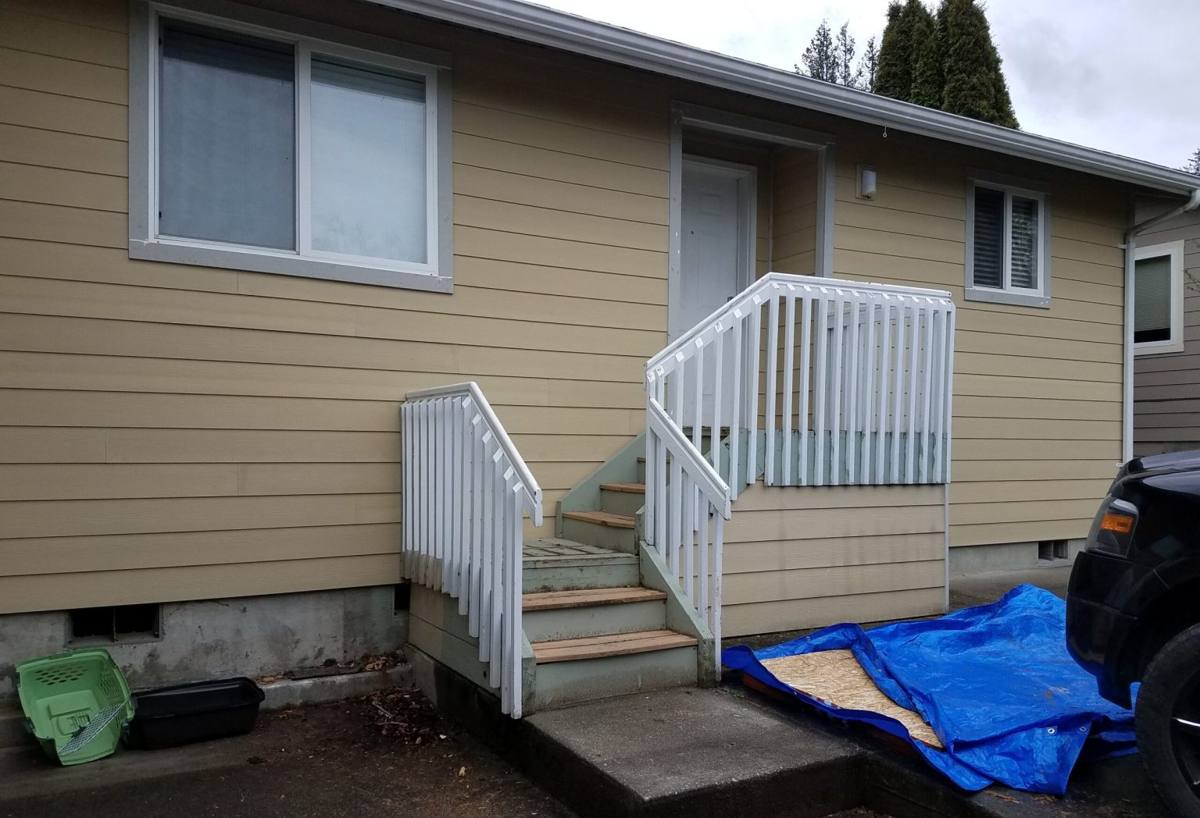
The Damage Patterns We See Most Often in Columbia
Every siding repair call is a little different, but in this area a handful of failure patterns show up again and again:
- Moss and algae staining at the lower courses and anywhere siding stays shaded and damp — cosmetic at first, but it holds moisture against the surface and shortens the life of whatever's underneath it.
- Swollen, delaminating, or soft panels on wood-based or composite siding where moisture has worked its way in through a seam, nail hole, or unsealed cut edge.
- Cracked or lifted caulking around windows, doors, and trim, which lets driving rain behind the siding instead of running off the surface.
- Corroded or failing fasteners and flashing, especially on older installs that didn't use coastal-rated materials.
- Impact damage from storm debris or fallen branches, which is common enough during winter wind events to plan for.
- Paint and coating failure — chalking, peeling, or fading well ahead of schedule because the coating wasn't built for this level of UV, salt, and moisture cycling.
The common thread in almost all of these is moisture management. Siding is a system, not just a surface — the housewrap, flashing, seams, and fastening all have to work together to keep water out and let any trapped moisture escape. A repair that ignores that system just delays the next failure.
What a Correct Repair Actually Involves
1. Find the Real Source, Not Just the Symptom
A stained or warped board is a symptom. The cause could be a failed seal at a window, a gap in flashing, poor grading that splashes water back onto the wall, or simply age. We open up the area enough to see what's happening behind the siding before we decide how to fix it. Repairing the visible board without addressing the entry point almost guarantees the same damage returns.
2. Match the Repair to the Existing System
If the home is already sided in fiber cement, we repair with fiber cement, matched in profile, exposure, and factory finish so the patch doesn't stand out or create a mismatched maintenance schedule down the road. If the existing siding is a product we don't install — vinyl, LP SmartSide, cedar, or similar — we'll still repair it honestly and competently, and we'll tell you plainly what we'd recommend instead when it's time to replace rather than patch.
3. Rebuild the Water Management, Not Just the Surface
Any repair that opens up the wall is a chance to correct what's failing behind it: replacing degraded flashing, correcting housewrap laps so water sheds outward and downward, and re-sealing penetrations with materials rated for sustained moisture exposure. Skipping this step is the single most common reason siding repairs fail early in wet coastal climates like Columbia's.
4. Use Fasteners and Trim Rated for Coastal Exposure
Standard fasteners can corrode faster near open water. We use fasteners and trim components suited to the salt-air exposure Columbia sees, not whatever's cheapest or most common inland. This matters more here than it does even a short distance further from the water.
Repair vs. Replace: How We Help You Decide
Not every damaged section needs a full re-side, and not every repair is worth doing if the underlying siding is near the end of its service life. We walk through this honestly rather than defaulting to whichever answer is more profitable for us.
| Situation | Usually Repair | Usually Replace |
|---|---|---|
| Damage is isolated to one wall or a few boards | Yes | No |
| Moisture damage is widespread behind the siding | No | Yes |
| Siding is under 10-15 years old and otherwise sound | Yes | No |
| Coating is failing across most of the home, not just one area | No | Yes |
| Original material is prone to recurring moisture issues (e.g., older wood composite) | Sometimes, short-term | Yes, long-term |
| Repeated repairs in the same area over past seasons | No | Yes |
If a home has had two or three "small" repairs in the same spot over a few years, that's usually a sign the underlying material or original installation is fighting the climate, not a sign it needs one more patch.
Why We Only Install and Repair With James Hardie Fiber Cement
When a repair calls for new material — whether patching a section or eventually replacing a full elevation — we use James Hardie fiber cement, and only James Hardie. It's a deliberate standard, not a default. Fiber cement doesn't absorb moisture and swell the way wood-based composites can, it's non-combustible, and Hardie's ColorPlus factory finish is engineered to hold color and resist the fading and chalking that shows up fast in high-UV, high-salt coastal air. Hardie also produces HZ5 products specifically engineered for cold, wet climate zones, which fits the exposure homes see in this part of Whatcom County far better than a one-size-fits-all product.
We won't install LP SmartSide, vinyl, Cemplank, Allura, primed spruce, or cedar, even though each has legitimate uses in the right setting. Our reasoning is practical: in a marine, high-moisture climate like Columbia's, the long-term maintenance burden, moisture sensitivity, and finish durability of those alternatives tend to work against homeowners over a 10-20 year horizon. Hardie's combination of moisture resistance, factory-applied finish, and a strong transferable warranty is what we're comfortable standing behind on repair work as well as full installs.
Our Repair Process, Start to Finish
- On-site inspection: We look at the damaged area and the surrounding siding, plus anything nearby (grading, gutters, vents) that may be contributing.
- Diagnosis: We identify the actual water or damage source before quoting a fix.
- Written estimate: A clear scope of work and price range, with repair and (if relevant) replacement options laid out honestly.
- Material matching: For fiber cement homes, we match profile, exposure, and finish as closely as possible.
- Repair execution: Remove damaged material, correct any flashing or housewrap issues found underneath, install new material and fasteners rated for coastal exposure.
- Sealing and finish work: Proper caulking and trim detail so water sheds correctly at every seam and penetration.
- Final walkthrough: We show you what was done and why, including anything we'd flag for the future.
Seasonal Timing for Repairs in Columbia
Late spring through early fall is the most reliable window for siding repair in this area, since it gives caulking, sealants, and any coating work time to cure properly before the wet season returns. That said, isolated damage — a cracked panel from storm debris, a fastener failure, a section that's letting water in — shouldn't wait for "the right season" if it's actively exposing the wall assembly to moisture. We can assess and stabilize urgent damage year-round and schedule cosmetic or lower-priority work for drier months.
A Simple Pre-Repair Checklist for Homeowners
Before calling for an estimate, a quick walk around the home can help us prioritize the visit and give you a better sense of what you're dealing with:
- Look for soft spots by pressing gently on siding near ground level and below windows.
- Note any areas with persistent moss, algae, or dark staining, especially on shaded or north-facing walls.
- Check caulking at window and door trim for cracking, gaps, or separation.
- Look for peeling, bubbling, or chalky paint that wipes off on your hand.
- Check gutters and downspouts for clogs or misdirected water landing against the siding.
- Note any areas where tree branches or shrubs are in constant contact with the siding.
None of this replaces a proper inspection, but it helps us understand the scope before we're on-site and gives you a head start on what to expect.
Why Local Experience in Columbia Matters
A contractor who works this specific stretch of Whatcom County regularly already knows which wall orientations take the worst weather, how fast moss builds back if it's not addressed at the source, and which fastener and flashing choices actually hold up against the salt air here. That's not something you can fully replicate from a general specification sheet — it comes from repeatedly seeing how this climate ages a house. It also means we're not guessing about turnaround times, seasonal scheduling, or what "driving rain" really means for a wall assembly in this area — we've seen it firsthand on other homes nearby.
If you're noticing damage, staining, or recurring problem spots on your siding, we're glad to take a look and give you a straightforward assessment — no pressure, no upsell, just an honest read on what's going on and what it would take to fix it right. Reach out for a free estimate using the form below.