 Whatcom County
 Blaine's Roofs Work Harder Than Most
Blaine sits at the northwest corner of Whatcom County, right where Boundary Bay and the Strait of Georgia meet the mainland. That location is part of what makes the town beautiful, and it's also exactly why roofs here age differently than roofs twenty miles inland. Salt-laden air moves off the water and settles on every exposed surface. Wind-driven rain comes in sideways during winter storms, testing every lap and seam instead of just falling straight down onto shingles the way it does elsewhere. And the long, wet, mild fall-through-spring stretch that Whatcom County is known for gives moss and algae months at a time to get established on north-facing slopes and shaded valleys.
None of that means a Blaine roof is doomed to fail early. It means the repair work has to account for conditions a roofer working in a drier, inland climate never has to think about. That's the whole premise of this page: what roof repair actually needs to look like for a home in Blaine, not a generic checklist copied from a national franchise site.
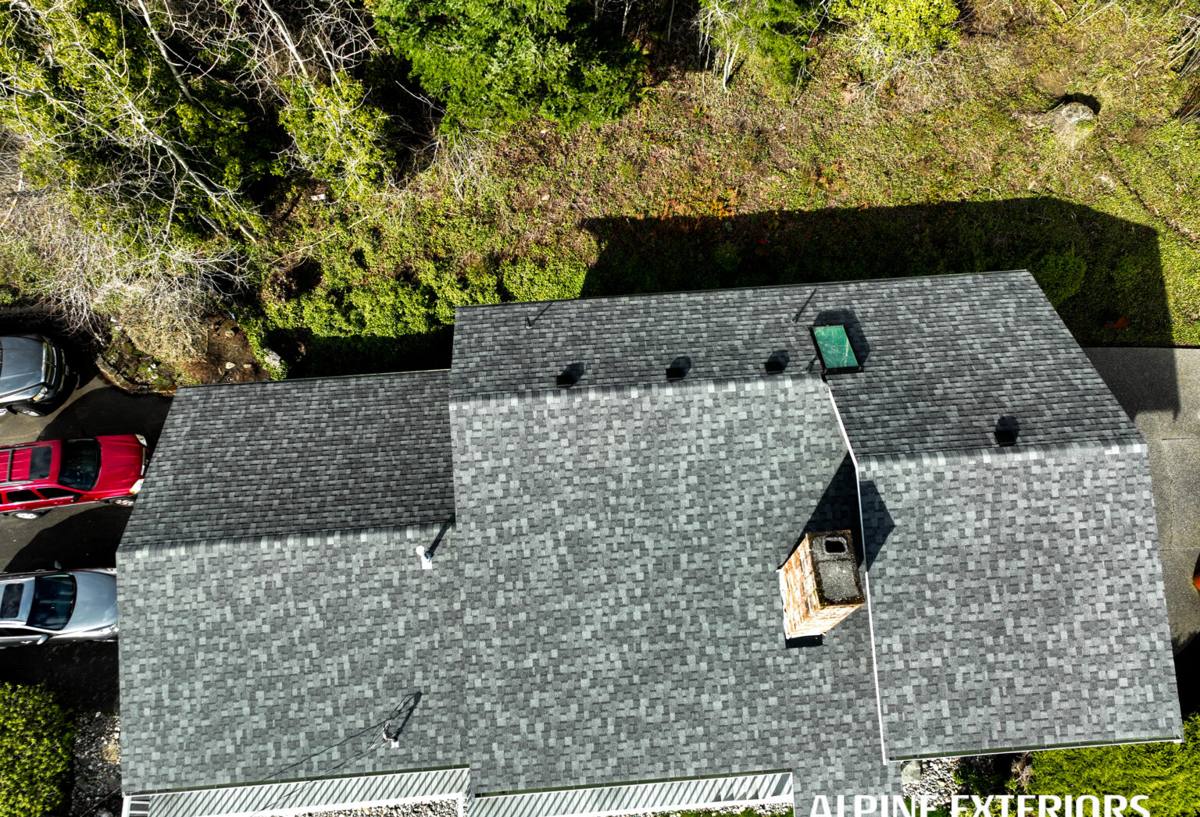
How Salt Air, Rain, and Moss Actually Damage a Roof
Salt Air and Metal Fasteners
Salt in the air accelerates corrosion on anything metal — nail heads, flashing, drip edge, valley metal, and the fasteners holding shingles or panels down. A fastener that would last decades inland can start rusting and weakening years sooner this close to the water. Once a nail head corrodes and loses its grip, the shingle or panel around it starts to lift, and that's an open door for wind and water.
Driving Rain and Wind-Driven Water
Blaine gets its share of winter windstorms coming off the Strait. Rain that's being pushed sideways doesn't just land on a roof surface and run off — it finds its way under shingle tabs, around poorly sealed flashing, and into any gap that would be harmless in calm weather. Repairs that only address the visible damage and ignore how water moves under wind pressure tend to fail again within a season or two.
Moss, Algae, and Trapped Moisture
Whatcom County's long wet season gives moss real time to take hold, especially on shaded, north-facing roof planes and in valleys where debris collects. Moss doesn't just look bad — its root structure lifts shingle edges and holds moisture directly against the roofing material, which speeds up granule loss on asphalt shingles and rot on any exposed wood. Left alone through a few wet seasons, a mossy patch turns into a soft, failing section of roof.
Signs a Blaine Home Needs Roof Repair Now
Most roof problems in this area start small and stay hidden until they've caused interior damage. Catching them early is almost always cheaper and less disruptive than waiting.
- Moss or algae streaking on north-facing slopes or in shaded valleys
- Granules collecting in gutters or at downspout outlets
- Curling, cupping, or cracked shingle edges, especially on wind-exposed slopes
- Rust staining below metal flashing, vents, or valleys
- Soft or spongy spots when walked (only assessed by a trained crew, never as a DIY test)
- Water stains on interior ceilings, especially after a windy rainstorm
- Daylight visible through the attic roof deck
- Loose, lifted, or missing shingles after a storm
What a Correct Roof Repair Actually Involves
A roof repair that holds up in this climate is never just "replace the shingle you can see." It's a sequence of steps that accounts for what's happening underneath the surface.
- Full-slope inspection, not just the reported spot. If one area shows damage, wind and water have usually stressed the surrounding field too. We check the whole slope, the valleys, and the flashing details before quoting anything.
- Underlayment and decking check. Any area with a history of leaking gets checked for wet or rotted sheathing underneath. Replacing shingles over a soft deck is a temporary fix at best.
- Flashing and valley review. Because wind-driven rain exploits flashing failures more than open field damage, we treat step flashing, valley metal, and vent boots as high-priority repair points, not afterthoughts.
- Moss and debris removal, done correctly. Moss is removed with methods that don't strip granules or damage the shingle surface — no pressure washing directly on asphalt shingles.
- Matching materials where possible. We match existing shingle type, color, and exposure as closely as the manufacturer's current lineup allows, so a repair doesn't stand out as an obvious patch.
- Fastener upgrade where corrosion is the root cause. If corroded fasteners caused the failure, we don't just replace the shingle with the same fastener that will corrode again — we address the actual cause.
Repair or Replace? A Straight Answer
Not every damaged roof needs a full replacement, and not every roof is worth repairing again. Here's how we think through it honestly.
| Factor | Leans Toward Repair | Leans Toward Replacement |
|---|---|---|
| Age of roof | Under 12-15 years, or a newer product with life left | Near or past its expected service life |
| Extent of damage | Isolated to one slope, valley, or flashing detail | Widespread granule loss, curling, or multiple leak points |
| Decking condition | Solid, dry sheathing under the damaged area | Soft, rotted, or repeatedly wet decking |
| Repair history | First or second repair on this roof | Third or more repair in the same area |
| Moss/algae staining | Surface-level, recently developed | Long-established, with visible shingle lift or granule loss |
We'll tell you plainly which category your roof falls into. If a repair is the honest answer, that's what we quote — we don't upsell a full replacement to a roof that has good years left in it.
How We Handle a Roof Repair Call in Blaine
The process is straightforward and we keep it that way on purpose:
- Inspection and photos. We walk the roof (weather permitting) or use a lift/drone when conditions or pitch require it, and document the actual condition before recommending anything.
- Written scope and estimate. You get a clear description of what's damaged, what we'll do about it, and a firm price — no vague line items.
- Scheduled repair. We work around Whatcom County's weather windows. Winter storm damage often needs a temporary weatherproof cover before the permanent repair can be done in a dry stretch.
- Cleanup and haul-away. Old material, nails, and debris leave with us — we don't leave a magnet-sweep to chance.
- Follow-up. If anything about the repair doesn't hold up as expected, we come back and make it right.
Materials and Fasteners That Actually Belong Near Salt Air
Not every product sold at a supply house is a good match for a home two miles from Boundary Bay. Our standard for Blaine repairs leans toward corrosion-resistant fasteners and flashing metals rather than the cheapest compliant option, because replacing a corroded nail twice is more expensive and more disruptive than specifying the right one the first time. The same logic applies to sealants — some products break down faster under constant damp, salt-air exposure, and UV, so we use products rated for that kind of sustained exposure rather than a general-purpose caulk. This isn't about brand loyalty; it's about matching the material to what the site actually does to it over years, not just what looks fine on install day.
Keeping a Blaine Roof Healthy Between Repairs
A repair holds up longer when the rest of the roof is maintained with this climate in mind. A few habits make a real difference:
- Keep gutters and valleys clear of needles and debris so water has somewhere to go during heavy rain
- Trim back overhanging branches to cut down on shade, debris, and moss-friendly conditions
- Have moss treated at the first sign of it rather than after it's established
- Schedule a post-storm check after any significant windstorm off the Strait, even if nothing looks obviously wrong from the ground
- Get an annual look at flashing points around chimneys, vents, and skylights — these fail before the open field almost every time
Why a Crew That Already Works Blaine Matters
Roof repair advice that works for a dry, inland climate doesn't automatically transfer to a town sitting on Boundary Bay. A crew that already works throughout Whatcom County knows which slopes in this area tend to hold moss longest, how far wind-driven rain actually travels up under a shingle course in a real winter storm, and which fastener and flashing choices hold up versus which ones show corrosion within a few years. That local pattern recognition is the difference between a repair that's cosmetic and one that actually solves the problem the climate is causing.
If you've got a roof issue in Blaine — whether it's a stain on the ceiling, visible moss, or storm damage you want checked out before it becomes a bigger problem — we're happy to take a look and give you a straight assessment. Fill out the form below for a free, no-pressure estimate.