 Whatcom County
 Windows in Birchwood Have a Harder Job Than People Think
Birchwood sits close enough to the water and the marine weather patterns that move through Whatcom County that its windows take a beating most homeowners never fully notice until something goes wrong. Salt-tinged air corrodes hardware and finishes faster than it would inland. Driving rain, pushed sideways by wind off the Strait and the Bay, finds every gap in flashing and trim. And the long stretch of grey, wet months each year keeps wood, vinyl, and even some metal components damp for weeks at a time, which is exactly the environment moss, mildew, and slow rot need to take hold.
None of that means Birchwood homes need anything exotic. It means the windows going in — and the way they're installed — have to be matched to this specific climate instead of a generic weather assumption. That's the difference between a window that looks fine for a season and one that performs for twenty years.
What "Custom" Actually Means Here
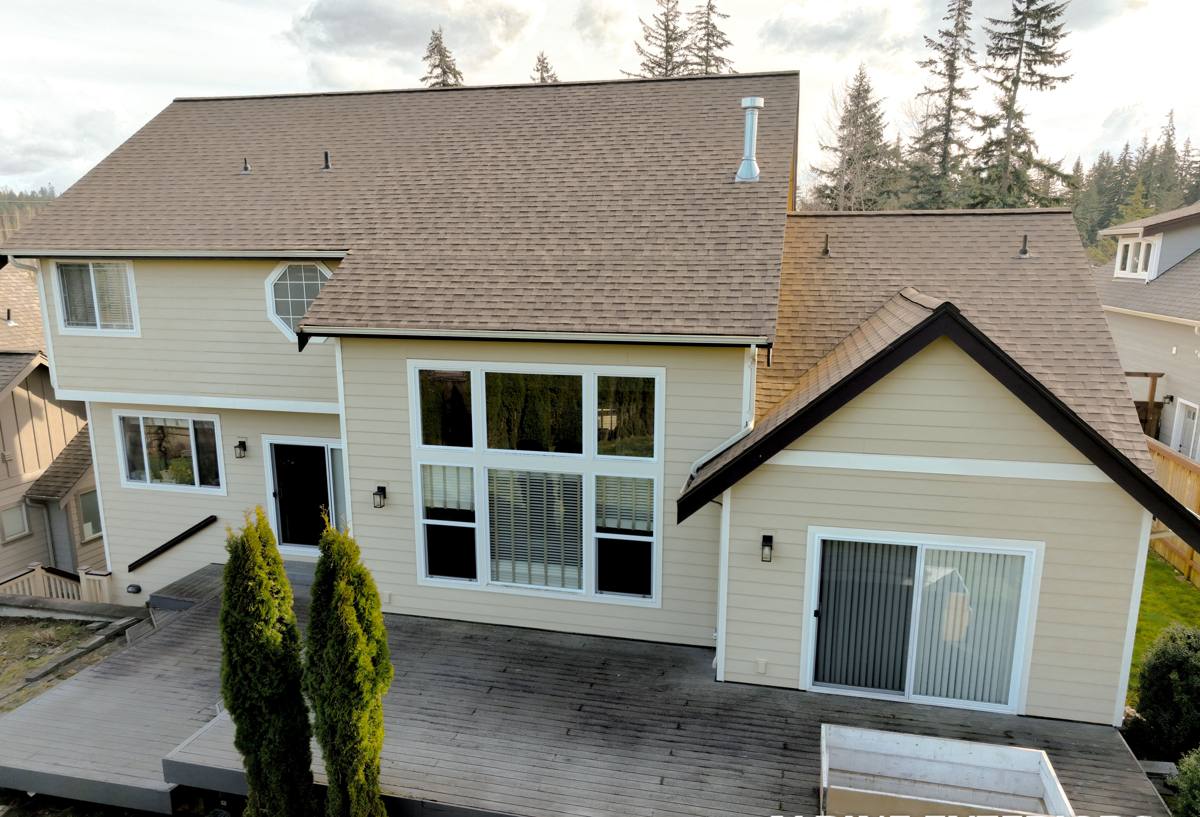
We use the word "custom" carefully. It doesn't mean upgraded trim packages or a fancier grid pattern — though those are options. It means the window is built to fit your actual opening, in your actual home, which matters more in older Whatcom County neighborhoods than most people expect.
Why Off-the-Shelf Sizing Falls Short
Homes in this area span a wide range of ages and construction styles, and rough openings shift over decades from settling, moisture cycling, and past remodels. A stock-sized replacement window forced into an opening that's slightly out of square almost always needs shims, extra caulk, or trimmed-down jamb extensions to fit — every one of those workarounds is a place water can eventually find its way in. A properly measured custom window closes that gap before it exists.
Custom Also Means Matched to the Wall Assembly
The frame depth, the flashing approach, and the interior trim all need to match how your specific wall was built — not a one-size install method used everywhere. This is especially true on additions or older sections of a house where wall depth and sheathing can differ from room to room.
Signs a Birchwood Home Is Overdue for Window Work
Most window failures here start quietly. By the time you can see the problem, moisture has usually already been working on the framing underneath for a while. Look for:
- Fogging or a permanent haze between the panes of a double-pane window — the seal has failed and the gas fill is gone
- Soft or discolored wood on the interior sill or exterior trim
- Visible moss or dark streaking building up around the frame or on the sill even after cleaning
- Windows that are hard to open, close, or lock — frames can swell or warp from repeated moisture exposure
- A noticeable draft or cold spot near the window even when it's fully closed and latched
- Condensation forming on the inside of the glass regularly through fall and winter
- Visible daylight or a gap where the frame meets the siding or trim
Any one of these on its own isn't an emergency, but they're worth having looked at before the next wet season adds to the damage.
Materials and Frame Types: What Holds Up in This Climate
There's no single "best" window material — there's a best fit for your home, your budget, and how much upkeep you're willing to do. Here's how the common options actually perform in Whatcom County conditions:
| Frame Material | Moisture & Salt Air Behavior | Maintenance | Trade-Offs |
|---|---|---|---|
| Vinyl | Won't rot or corrode; performs well in damp, salty conditions | Low — occasional cleaning | Can't be repainted; frame can flex on very large openings |
| Fiberglass | Excellent — dimensionally stable, resists moisture and salt exposure well | Low | Higher upfront cost than vinyl |
| Wood (unclad) | Attractive but vulnerable — needs consistent sealing to resist our wet season | High — regular painting/sealing | Best reserved for covered or protected openings unless maintenance is a priority |
| Wood-clad (aluminum or fiberglass exterior) | Good — exterior shell protects the wood core from rain and salt air | Moderate | Cladding integrity at joints matters more here than in drier climates |
| Aluminum | Corrosion-resistant coatings help, but bare aluminum can pit near salt air over time | Low to moderate | Conducts cold; look for thermally broken frames in this climate |
For most Birchwood homes we lean toward vinyl or fiberglass for straightforward replacements, and wood-clad when a homeowner wants the interior warmth of real wood without exposing it to the weather. We're honest that unclad exterior wood is a real commitment here — it can look excellent, but only if someone stays on top of the finish every couple of years. That's a maintenance decision for you to make, not a knock on wood as a product.
Glass Packages Worth Considering
Double-pane, low-E glass with argon fill is the standard baseline for this region and handles our temperature swings and condensation concerns well. Triple-pane adds cost and weight but can be worth it on north-facing rooms or walls that catch the worst of the wind-driven rain. We'll walk through what makes sense for your specific exposure rather than upselling every job to the top-tier glass.
What a Correct Installation Actually Involves
The window itself is maybe half the job. The other half — the part that determines whether it lasts — is how it's flashed and sealed into the wall.
- Removing the old window carefully and inspecting the rough opening and sill for hidden rot before anything new goes in
- Repairing or replacing any damaged framing found underneath — this is common in older homes and should never be skipped or covered up
- Installing a proper sloped sill pan so any water that gets past the window drains outward, not into the wall
- Flashing the window in the correct order — sill, jambs, then head — so each layer sheds water onto the layer below it, shingle-style
- Sealing with the right materials at the right points, not just running a bead of caulk around the outside trim and calling it done
- Insulating the gap between the frame and the rough opening properly, without overpacking it in a way that can bow the frame
- Reinstalling or matching exterior trim and siding tie-in so the water management of the wall stays continuous
Skipping or rushing any one of these steps is how a brand-new window ends up with a rot problem in five years. We've opened up enough walls in this area to know it's almost always the flashing and sill detail that failed, not the window unit itself.
How the Job Works, Start to Finish
- Free on-site estimate — we look at each opening individually, not just the house as a whole, since conditions can vary window to window
- Honest assessment — we tell you which windows genuinely need replacement now, which can wait, and why
- Custom measurement and ordering — every window is measured for its specific opening rather than assumed to match a standard size
- Removal and inspection — old units come out, and we check the framing and sill before installing anything new
- Installation with proper flashing and sealing — following the sequence above, not shortcuts
- Interior and exterior finish work — trim, caulking, and cleanup so the job looks finished, not patched
- Final walkthrough — we test operation, locks, and seals with you before we consider the job done
What Drives the Cost
We won't quote a number here that doesn't reflect your actual home, but the factors that move a custom window job up or down in price are consistent:
| Factor | How It Affects Cost |
|---|---|
| Frame material | Vinyl typically costs less than fiberglass or wood-clad; unclad wood varies with the wood species and finish |
| Window size and configuration | Large picture windows, bays, or custom shapes cost more than standard operable sizes |
| Condition of the existing opening | Hidden rot or framing repair adds labor and materials beyond the window itself |
| Glass package | Triple-pane, tinted, or impact-rated glass adds cost over standard double-pane low-E |
| Number of windows | Doing several openings in one visit is more efficient than one-off replacements over time |
| Access and site conditions | Second-story or hard-to-reach windows require more setup time |
Most homeowners find it more cost-effective to replace windows in groups — by room or by exterior wall — rather than one at a time over several years, since a lot of the setup and trim work is shared across multiple units in the same visit.
Why It Matters That We Already Work in Birchwood
A crew that already works Whatcom County neighborhoods like Birchwood isn't guessing at how to detail a window for this weather — we've seen what fails here and what holds up. We know what a sill pan needs to look like when it's going to face driving rain off the water most winters, and we know which framing issues show up most often in homes of a certain age in this area. That local pattern recognition is hard to replicate with a crew that mostly works drier inland regions or does one job in your neighborhood a year.
It also means we're not disappearing after the invoice clears. If a question comes up after the install — about condensation, a stiff lock, or anything else — we're a local call, not a company based somewhere else entirely.
Ready to Talk About Your Windows?
If you're dealing with drafty, foggy, or hard-to-operate windows anywhere in Birchwood or elsewhere in Whatcom County, we're glad to take a look. Fill out the form below for a free, no-pressure estimate — we'll assess your actual openings, explain what we find, and give you honest options with no obligation to move forward.