 Whatcom County
 Why Bellingham Roofs Wear Out Faster Than the Brochure Says
A roof in Bellingham does a different job than a roof in a dry inland climate. Between the marine air coming off Bellingham Bay and the surrounding Salish Sea, the near-constant fall-through-spring rain, and the shade from mature fir and cedar cover that keeps north-facing slopes damp for days after a storm, Whatcom County asks more of a roof system than most manufacturers design for on paper. Salt-laden air accelerates corrosion on fasteners, flashing, and vent components. Driving, wind-pushed rain finds gaps that would never leak in a calmer climate. And a long moss season means organic growth is working against your shingles almost year-round, not just in a few wet months.
None of that means a roof here has to fail early. It means the installation details that get skipped elsewhere — the ones that don't show up until year six or seven — matter more here, sooner. That's the lens we bring to every new roof installation we quote in Bellingham.
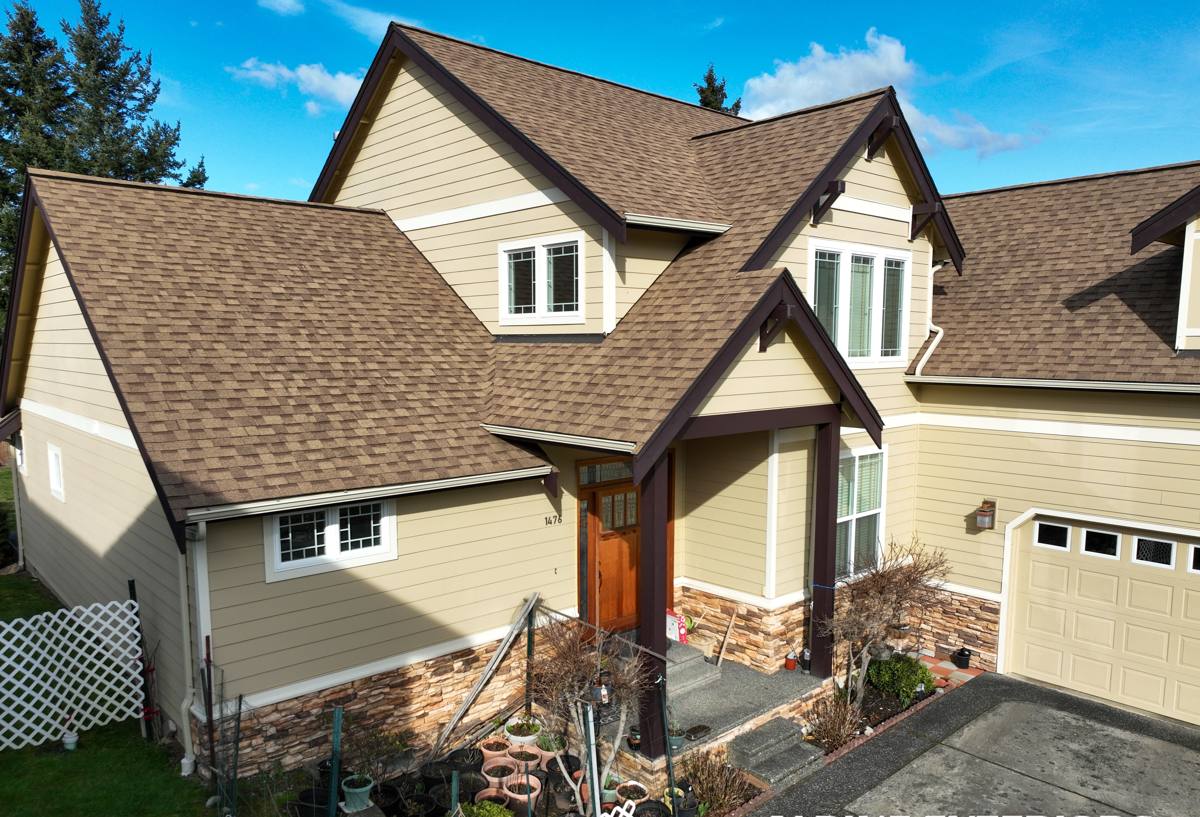
What a Correct New Roof Installation Actually Involves
"New roof" sounds simple, but a roof is a system, not a single product. Skipping any one layer shortens the life of all the others, no matter how good the shingle or metal panel on top looks.
Tear-Off and Deck Inspection
A full tear-off lets us see the actual condition of the roof deck — something you cannot evaluate from the ground or from photos. Soft, delaminated, or water-stained sheathing gets replaced before anything new goes down. Installing new roofing over a compromised deck is one of the most common ways a "new" roof fails early.
Underlayment and Weather Barrier
Given how much of the year Whatcom County spends under active rainfall, we treat underlayment as a real second line of defense, not a formality. Self-adhered membrane at eaves, valleys, and other vulnerable transitions matters more here than in drier regions, because wind-driven rain regularly gets pushed uphill under shingles before it ever reaches a gutter.
Flashing at Every Transition
Chimneys, skylights, sidewalls, valleys, and pipe penetrations are where the overwhelming majority of roof leaks actually start — not in the open field of shingles. Correct flashing, properly lapped and sealed, is where installation skill shows up most.
Ventilation
Balanced intake and exhaust ventilation keeps the attic close to outdoor temperature and moisture levels. In a damp climate, poor ventilation traps humidity against the underside of the deck, which shortens shingle life from below and can encourage rot you won't see until it's advanced.
Choosing a Roofing Material for a Whatcom County Home
There's no single "best" roofing material — there's a best fit for your home's exposure, roof pitch, budget, and how much long-term maintenance you're willing to take on. Here's how the common options compare for this climate specifically.
| Material | Moss & Algae Resistance | Performance in Wind-Driven Rain | Typical Lifespan | Relative Cost |
|---|---|---|---|---|
| Asphalt composition shingle (standard) | Moderate; benefits from algae-resistant granules | Good when installed with proper underlayment and flashing | 20–30 years | Lowest upfront |
| Asphalt composition shingle (architectural/impact-rated) | Better than standard, especially with algae-resistant options | Very good | 25–35 years | Moderate |
| Standing seam metal | Excellent — sheds moisture, little surface for growth to root into | Excellent | 40–60 years | Higher upfront |
| Wood shake/shingle | Poor without diligent, ongoing maintenance | Fair; requires careful detailing | Varies widely with upkeep | Moderate to high |
We're honest with homeowners about wood shake in this climate: it can look great, but it demands a level of ongoing moss and moisture maintenance that most owners underestimate, and the long wet season here works against it more than in drier parts of the state. That's a maintenance-burden and moisture-behavior tradeoff, not a knock on the material itself — it's simply a bigger commitment than most other options.
Moss, Algae, and Why Ventilation Is Part of the Fix
Moss doesn't just look bad — it holds moisture against the roofing surface, works its way under shingle tabs, and lifts edges over time, which is exactly what opens the door to leaks. In Whatcom County, shaded, north-facing slopes and roofs under tree cover are the areas that need the most attention.
Two things reduce moss pressure over the life of a roof: getting airflow right during installation (so the deck and underside of the roofing stay drier) and staying ahead of maintenance afterward — periodic gentle cleaning and keeping gutters and valleys clear so water doesn't sit. Zinc or copper control strips near the ridge are a reasonable supplemental measure on shaded roofs, but they work best as one part of a system, not a substitute for good ventilation and drainage.
Our Bellingham Roof Installation Process
- On-site inspection and estimate — we walk the roof (weather permitting) and the attic, not just look from the driveway, and give you a written scope and price.
- Material selection — we walk through the tradeoffs above based on your roof's exposure, pitch, and budget.
- Permitting — we handle the paperwork with the local building department before work starts.
- Scheduling around weather — we plan tear-off days around dry windows so your home isn't exposed to open sky longer than necessary.
- Tear-off and deck repair — old roofing comes off, deck condition gets confirmed, and any needed repairs happen before new material goes down.
- Installation — underlayment, flashing, roofing material, and ventilation components installed to manufacturer and code specification.
- Cleanup and magnetic nail sweep — job site and yard cleared of debris and stray fasteners.
- Final walkthrough — we review the finished roof with you and go over warranty paperwork before we consider the job done.
Permits and Local Requirements
A full roof replacement in Bellingham and the surrounding parts of Whatcom County typically requires a building permit, and the work needs to meet current code for underlayment, flashing, and ventilation given the region's wind-driven rain exposure. We pull permits and coordinate inspections as part of the job rather than treating that as the homeowner's problem to sort out — it's part of what a legitimate installation includes.
What Affects the Cost of a New Roof in Bellingham
Roofing quotes vary widely because the variables genuinely are different from house to house. Broadly, a straightforward asphalt shingle replacement on a modest home might run in the lower-to-middle five figures, while a larger roof, steep pitch, complex flashing work, or premium material like standing seam metal can push well beyond that. The factors that actually move the number:
- Total roof square footage and pitch (steeper roofs take longer and cost more to work safely)
- How many layers of old roofing need to be torn off
- Condition of the decking underneath — hidden rot means added repair cost
- Material chosen (asphalt vs. metal vs. specialty products)
- Number of penetrations — chimneys, skylights, vents — each needs its own flashing detail
- Access and tree cover, which affect labor time and cleanup
- Ventilation upgrades needed to bring an older attic up to a proper standard
Any contractor should be able to walk you through which of these are driving your specific price — if they can't explain the number, that's worth asking more questions about.
Why a Crew That Already Works in Bellingham Matters
Roofing crews that work this specific area regularly build habits that generic or out-of-area crews often don't: they know which slopes in this climate need extra ventilation attention, they schedule tear-offs around realistic rain windows instead of guessing, and they've dealt with the local permitting process enough times to not slow the job down. That local familiarity with Whatcom County's weather patterns, common roof types, and building department expectations shows up in fewer surprises and a tighter, better-sealed final result — not in anything flashy, just in the details holding up years later.
What to Expect After Installation
A new roof typically carries two separate warranties: a manufacturer's warranty on the material itself, and a workmanship warranty from the installing contractor covering the labor and installation details. It's worth understanding both — a great shingle installed poorly is still a poorly installed roof. After installation, the maintenance list is short but real: keep gutters and valleys clear, keep an eye on moss growth on shaded slopes, and address small issues (a lifted shingle tab, a gap in caulking around a penetration) before they become bigger ones.
If you're weighing a new roof for a Bellingham home and want a straight answer about condition, options, and realistic cost, we're glad to take a look. The form below gets you a free, no-pressure estimate — no obligation, just an honest assessment of what your roof actually needs.